
Last updated November 21, 2026
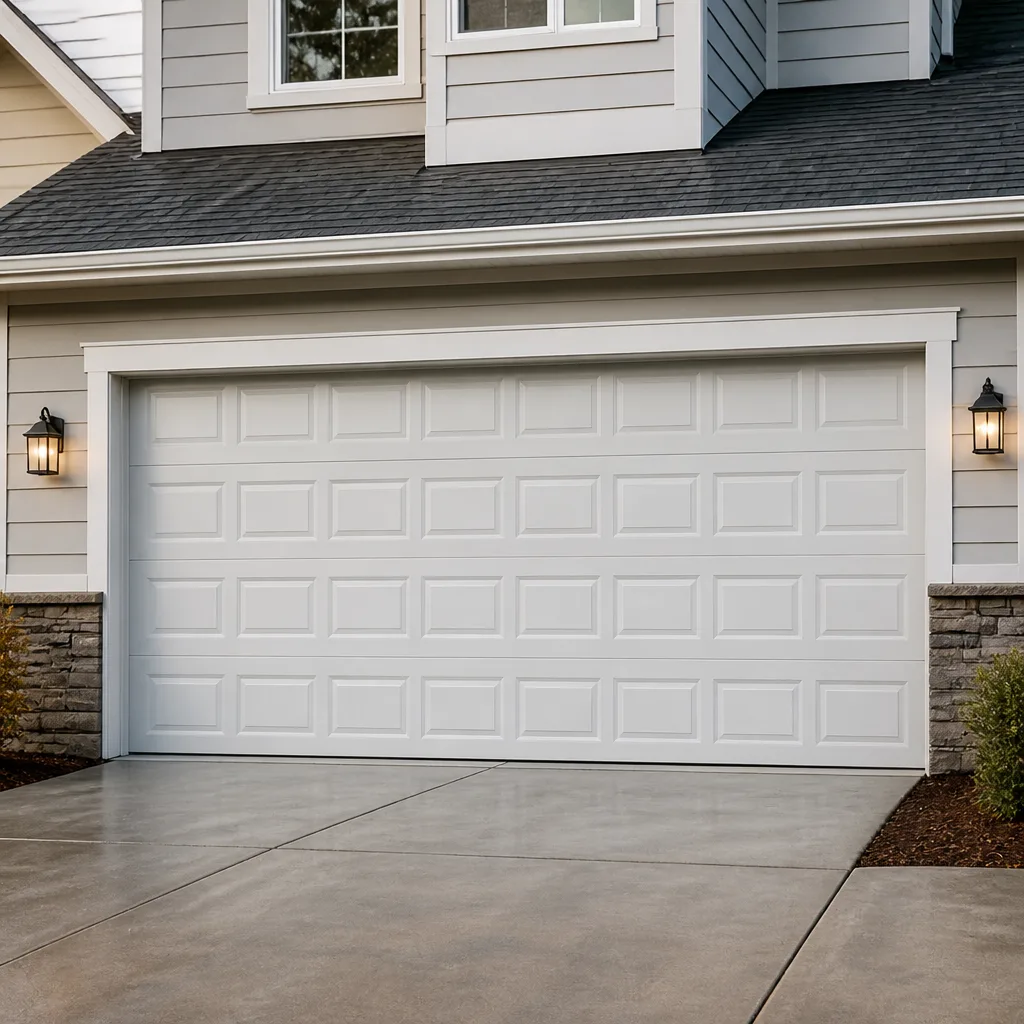 Raised-panel steel
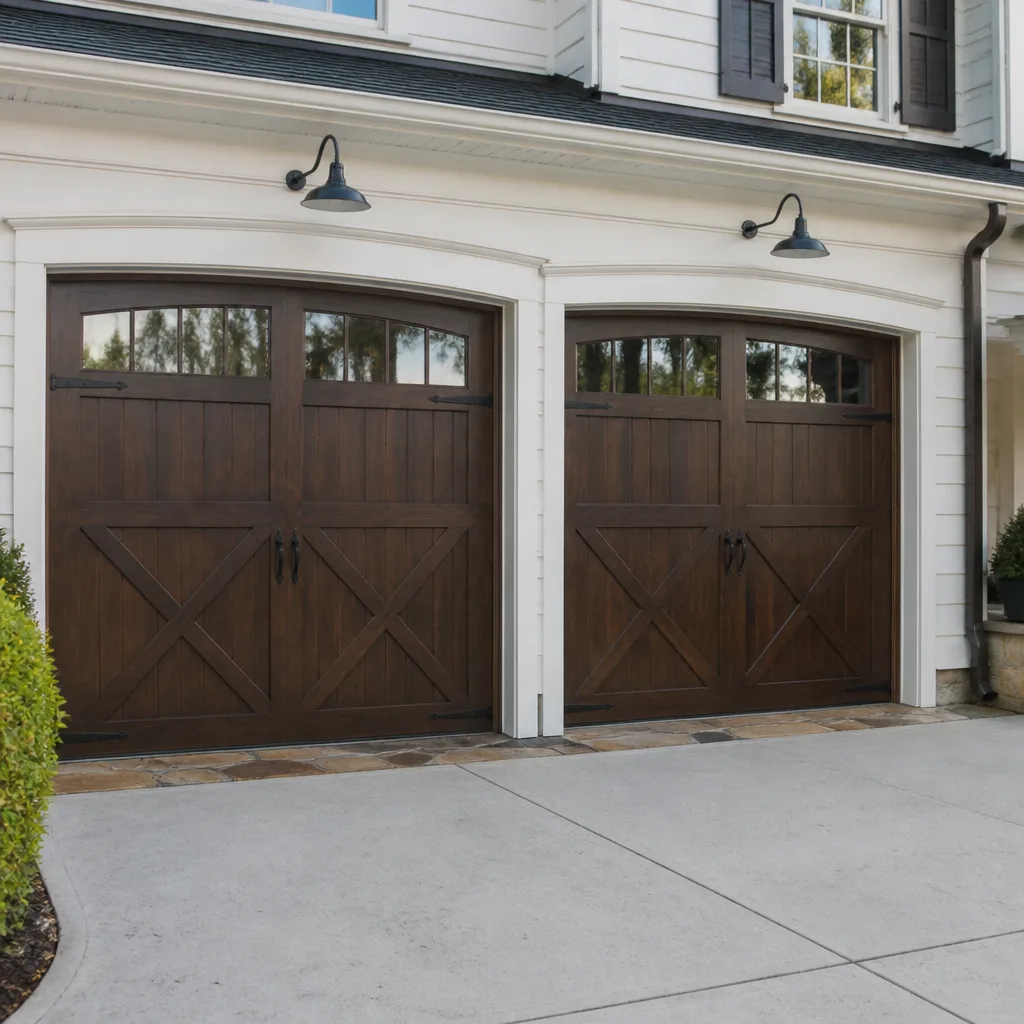 Carriage house
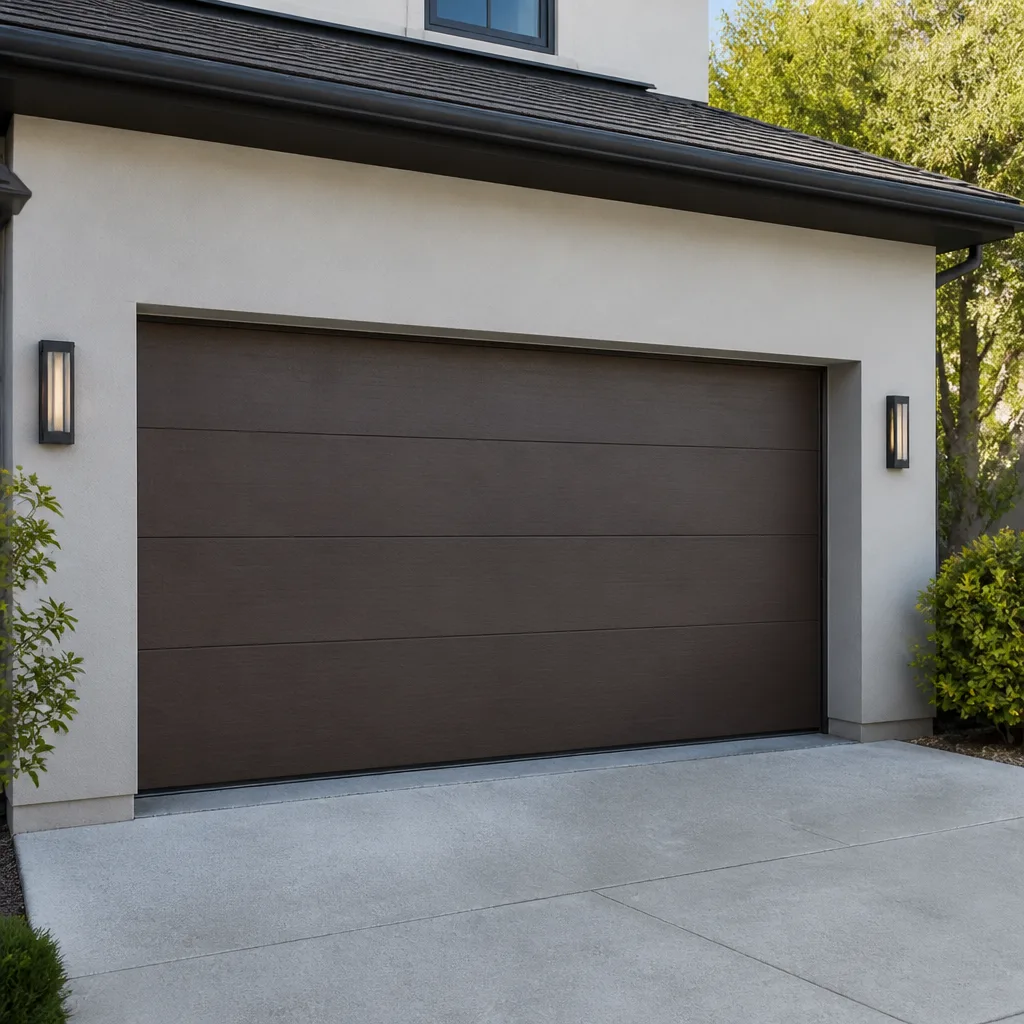 Modern flush
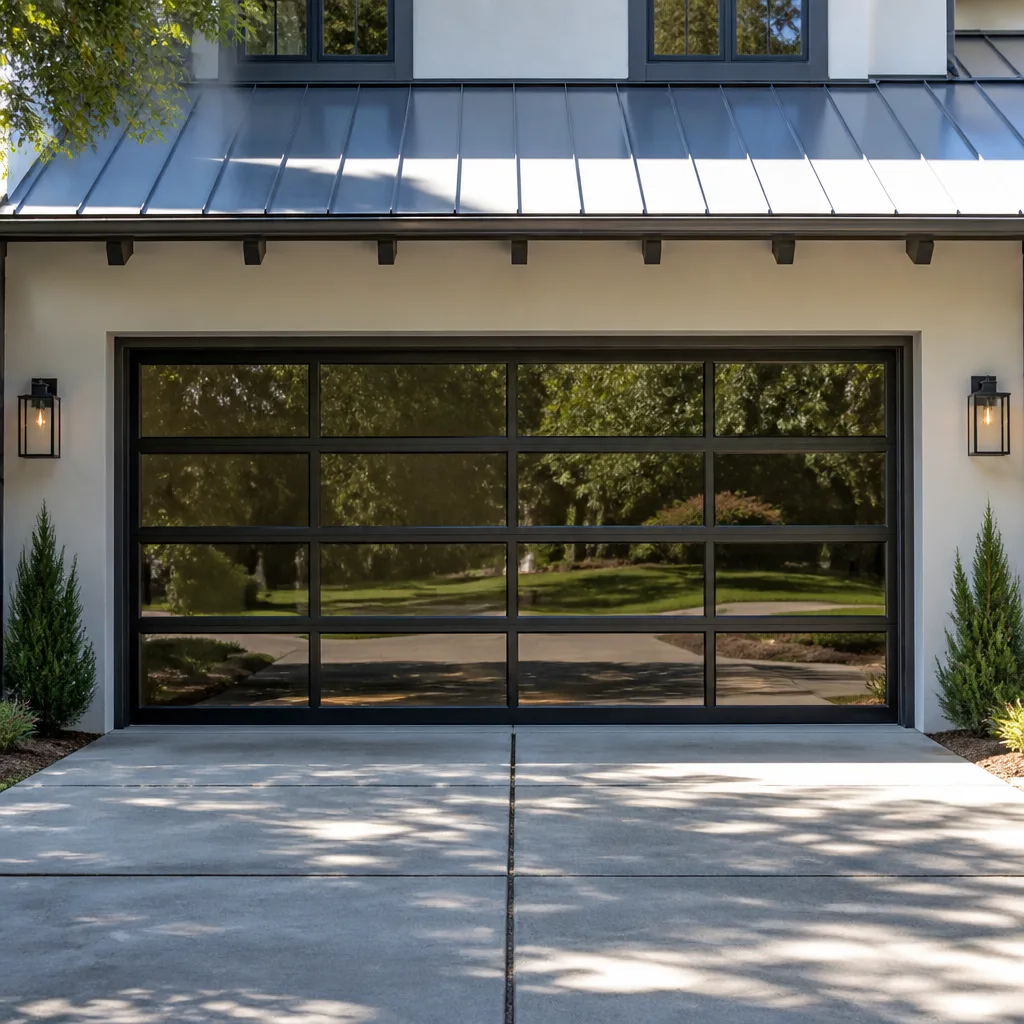 Full-view glass
 LiftMaster openers
 Chamberlain openers
Full 25-point door and opener safety check with every visit - springs, cables, rollers, tracks, and your LiftMaster or Chamberlain opener included
You get a price before we start. It does not change when the pro arrives.
Get your free estimateGarage Door Warning Signs: A South Ozone Park Homeowner’s Reference Guide
Most garage doors don’t fail without warning. They telegraph the failure for weeks, sometimes months, and the average homeowner reads every signal as “it’s just getting old.” That’s the expensive mistake. A door that hesitates for two seconds before it lifts isn’t aging gracefully, it’s fighting a tension imbalance that puts several times the normal load on the opener motor, and the motor loses that fight sooner than you’d think. In this guide, we’ll walk through every warning sign your door gives you, connect each one to the exact failure it precedes, and show you which signs mean stop using the door today. We’ve watched South Ozone Park homeowners save themselves a much bigger bill by reading these signs early, and we’ll show you how to do the same.
Quick Answer
Garage door warning signs fall into three categories: sounds (grinding, squealing, popping, banging), visual cues (rust on cables, a separated bottom seal, stress cracks at panel corners), and operational symptoms (hesitation, uneven travel, a door that won’t stay halfway open). Grinding points to rollers or bearings, squealing points to dry or worn rollers, popping points to a failing spring, and banging points to loose hardware or a torsion problem. Any popping spring sound or a visibly broken spring means stop using the door immediately and call a professional. Everything else can usually wait for a scheduled repair.
Styles & brands we work with
- Raised-panel steel
- Carriage house
- Modern flush
- Full-view glass
- LiftMaster openers
- Chamberlain openers
Table of Contents
- Symptom-to-Failure Map: What Each Noise Is Telling You
- Visual Warning Signs Most Homeowners Walk Past
- The 60-Second Balance Test
- Stop Using the Door Now vs. Schedule a Repair This Week
- Why South Ozone Park Weather Accelerates Wear
- Opener Warning Signs: Weak Motor, Failing Sensors, Legacy Systems
- How to Describe Warning Signs So the Technician Brings the Right Parts
Symptom-to-Failure Map: What Each Noise Is Telling You
Your door has a vocabulary. Each sound it makes corresponds to a specific component telling you it’s on the way out. Here’s the map we use in the field, and it holds for just about every residential system we see in South Ozone Park, whether it’s an Amarr steel door or an older Wayne Dalton that’s been on the same track for years.
Grinding: Rollers, Bearings, or Track Misalignment
A low grind that follows the door down usually means worn rollers or dry bearings at the hinges. Left alone, it scores the track itself, and a scored track is a replacement item rather than an adjustment. If the grind is only on one side, the track has likely bent or shifted, and the door is running crooked against it.
Squealing: Dry Rollers or Metal-on-Metal Contact
High-pitched squealing is the easiest sign to fix and the easiest to ignore. It usually means the rollers have dried out or the hinges are running metal on metal. This one buys you a week of scheduling flexibility, but if it’s been squealing since the spring and it’s still squealing, you should know it’s also been grinding metal into the track.
Popping: The Most Serious Sound in the Trade
A single loud pop, especially when the door starts to rise, is a torsion spring failing or a cable slipping its drum. That sound is a hard stop. The door should not be cycled again until a technician has seen it, and we’ll explain exactly why in a moment.
Banging or Rumbling: Loose Hardware or a Trolley Problem
Banging as the door makes contact with the floor usually points to loose hinges, a worn bottom bracket, or a trolley pulling away from the opener rail. In older Craftsman and Genie systems, that banging is often the first clue the rail hardware has loosened from vibration, a common symptom on doors that get cycled many times a day.
Why the Motor Takes the First Hit
Here’s the part most homeowners never hear. A door that hesitates on opening isn’t just “a bit sticky,” it’s out of tension balance, and an out-of-balance door can put several times the normal load on the opener motor every single cycle. The motor doesn’t fail from one bad day, it fails from the wear a heavy door grinds into it week after week. By the time the opener dies, you’re replacing both the spring and the opener instead of just the spring.
Visual Warning Signs Most Homeowners Walk Past
You don’t have to hear anything to catch a failing door. A walk-around every few months is enough to spot these, and they’re the signs technicians find ignored on the majority of urgent calls we take in South Ozone Park.
Rust on the Cables or Springs
Torsion springs and cables shouldn’t rust. If you see a dusting of brown on the spring coils or the cable that runs down the side, that surface rust is a sign the spring is losing tension or the cable is in its last season. South Ozone Park’s spring dampness and winter salt spray tracked in from the driveway speed this up considerably. A rusted cable can snap without warning, and a snapped cable whips with high tension. Do not handle it yourself.
Bottom Seal Separation
Run your hand along the bottom of the door and look for a gap between the rubber seal and the panel. Separated seals let water, air, and pests into the garage, and over a few winters they freeze, crack, and pull the seal away so far the door no longer closes evenly. It’s a small fix that, left alone, is the start of water damage on the bottom panel and track rust.
Stress Cracks at Panel Corners
Look closely at the corners of each panel where it meets the hinge. Hairline cracks there, and any crease that runs diagonally from the corner, mean the panel has been stressed by an imbalance or impact. Once a panel’s integrity is gone, the door can bow or bind. Garage door repair on a bowed panel often means panel replacement, and we’d rather you spot the crack when it’s a hairline than when it’s a crack through the hinge.
Door Sagging or Dropping on One Side
Stand inside the garage and look at the gap between the door and the floor on each side. If the gap on one side is wider, a spring has lost tension or a cable has stretched. An uneven door presses on one track, and over months that pressure bends the track out of alignment.
Drum Reeling Cable Off the Edge
At the top of the door on a torsion system, look at the cable winding onto the drum. If the cable is overlapping itself or sitting off the edge of the drum, the door has a serious balance problem. That cable can slip, and if it slips while the door is up, the door drops. Stop and call.
The 60-Second Balance Test
This is the single most useful self-check a homeowner can run, and it takes less than a minute. A balanced door means the springs, not the opener, are doing the lifting. An unbalanced door means your opener motor is working for its life every time you leave the house.
How to run the test safely:
- Pull the red manual release cord to disconnect the door from the opener.
- Lift the door by hand until it’s about halfway up, roughly waist to chest height.
- Let go completely. Don’t hold it, don’t guide it.
- Watch the door for three seconds.
How to read the result:
- Door stays put where you let it go: the door is balanced. Springs are under correct tension. Nothing to fix.
- Door drops or slides toward the floor on its own: the springs have lost tension, or one spring has failed while the other is still carrying the load. It’s only a matter of time before the opener can’t lift it, or the door doesn’t hold its weight.
- Door drifts up toward the ceiling on its own: the springs are over-tensioned, or a second spring has been running with the wrong setting. Over-tensioned springs load the tracks and the opener just as badly as under-tensioned ones.
Reconnect the door by pulling the release cord back and running the opener once so the trolley re-engages. If your door failed the test, don’t schedule a repair and then keep using it for weeks. A door that sags is a door whose torsion spring is under load, and torsion springs under load deserve a trained hand.
A safety note before you test: never touch the torsion bar, springs, or cables, and never try to tighten a spring yourself. Those springs store enormous force. They’re the single most dangerous component on a garage door, and a DIY adjustment is how people end up in the emergency room. If anything in that area looks wrong, stop and call a trained professional.
Stop Using the Door Now vs. Schedule a Repair This Week
Not every warning sign is urgent, and telling you every squeak is an emergency is how repair companies lose trust. Here’s the honest split we use in South Ozone Park.
Signs That Mean Stop Using the Door Immediately
- Any loud pop from the spring area. A broken torsion spring means the door’s weight is held by the opener or cables alone. Using the door can drop it on your car or on a person.
- A visible gap in a torsion spring. Look at the spring above the door. If there’s a gap in the coil, one spring has snapped. Do not cycle the door.
- A cable reeling off a drum or lying slack. Slack cable means no tension control. That door can fall.
- The door comes down faster than it should or slams the floor. That’s a brake or spring failure in progress. Keep it shut until a technician arrives.
- The door is crooked, binding, and won’t close flush on one side. Running a crooked door can bend the track and pop the panel off the roller carriage.
Signs That Allow Continued Use While You Schedule
- Squealing rollers. You can use the door, but keep it to a week. Squealing rollers are also wearing the track, and a healthy track shouldn’t be replaced over a $20 roller.
- Grinding that comes and goes. Same rule. The grind indicates track wear, and every cycle adds wear.
- Loose hardware banging. A missing hinge screw or a loose bottom bracket can usually wait for a scheduled repair. Check that nothing is hanging off the door in the meantime.
- A separated bottom seal. Schedule it, don’t live with it through spring rain. Water gets in fast once the seal pulls away, and the bottom panel is the one that rots first.
- A hesitation on opening with no pop and no balance failure. The door is likely due a spring service or adjustment soon. Schedule the repair within a week. If a pop follows the hesitation, stop using it immediately.
If your door failed the balance test or gave a pop, call (877) 810-4860. We answer 24/7. Fast dispatch from 7am to 7pm, Sunday through Friday.
Why South Ozone Park Weather Accelerates Wear
Garage doors wear faster in South Ozone Park than in a lot of places, and the climate is a big part of why. The area’s proximity to Jamaica Bay means humid summer air and wet springs, and that moisture works on the same metal parts that make a door move.
Spring and fall temperature swings are the biggest factor. A torsion spring that’s been correctly tensioned in March can go out of balance by August because the steel expands and contracts along with the weather. That slight drift is why we recommend running the balance test again in late spring and again after the first cold snap each fall.
Winter road salt tracked in from the driveway doesn’t rust the frame, but it does attack the bottom seal and the bottom panel where the door meets the floor. The rust stains you see along the bottom edge after a hard winter almost always start as a tiny tear in the seal. Once the seal is compromised, the wet gets into the steel and the panel edge starts to flake.
The housing stock in South Ozone Park matters too. Many homes here have single-car garages built decades ago, and the doors on them are often original. An original door means original torsion springs that have been cycled thousands of times. That doesn’t mean it must be replaced, but it does mean the springs deserve a professional look at least once. Two-car attached garages with Amarr or Wayne Dalton doors usually have longer service intervals, but the spring is still the wear item to watch.
Opener Warning Signs: Weak Motor, Failing Sensors, Legacy Systems
Half the warning signs homeowners call us about turn out to be the opener, not the door. The two wear differently and call for different fixes, and knowing which is failing when you call saves a diagnostic step.
Signs Your Opener Is Failing, Not Your Door
- The door lifts in jerks rather than one smooth motion. That’s the motor straining against load, or a gear or belt that’s worn.
- The opener clicks but doesn’t move the door. Usually a stripped gear in a chain-drive unit or a failed capacitor. Legacy Craftsman and Genie openers are the ones we see this on most.
- The door reverses on its own a few inches up. That’s the safety sensor tripping, and it can be a misaligned sensor, a dirty lens, or a wiring fault at the logic board.
- The remote works from close range only. That’s usually the opener’s receiver board or a dying battery, and both are quick to check.
- The opener runs but the door moves slowly or unevenly. That’s the motor fighting an unbalanced door, which brings you right back to the balance test.
What a Tech Actually Looks For
On any opener call, we check the motor and gear train, the safety sensor alignment, the force adjustment, and the door’s own balance and travel limits before touching anything. That diagnostic order matters: a LiftMaster or Chamberlain opener that’s reversing on its own might be protecting you from an underlying door problem, not failing itself. Replacing the opener without checking the door is how you get a call back next month.
If you’re not sure whether it’s the door or the opener, we’ll tell you on the phone what to check and what to expect. Garage door opener repair across the leading brands is the bulk of our work, and we’d rather you call with the right description than wait until the motor fails entirely.
Opener Replacements vs. Repair
Most opener problems are repairable. The failures that call for replacement are usually a dead logic board on an opener old enough that the board isn’t made anymore, or a motor that’s been overheated by months of dragging an unbalanced door. If the opener is old enough to be a legacy system and it’s already failing, a modern smart-home-compatible unit is the right call. If the opener is otherwise sound and the door is the problem, we’ll tell you that too. If your door needs replacement rather than repair, garage door installation is work we handle end to end without a second contractor.
How to Describe Warning Signs So the Technician Brings the Right Parts
Here’s a pattern we see on calls all the time: a homeowner calls and says “my garage door is broken.” So the technician shows up with the most general tool kit, finds out the problem is a snapped torsion spring, and now has to leave to fetch a matched spring pair. That second trip is a wasted afternoon and often pushes the repair into another day. Call with the right description and the job is done in one visit.
What to Say When You Call
- Where is the door? Give the address or cross street. It matters for scheduling and it matters for the tech’s arrival.
- What exactly is the sound or symptom? Grinding on the way down, squealing at the top, one loud pop at the start of the lift, and banging at the close are four different parts. Say which one you hear.
- What kind of door? Steel, wood, aluminum, single car, double car, roughly how tall is the opening.
- What opener brand? LiftMaster, Chamberlain, Genie, Craftsman, Raynor, and others all have different access and parts. If you don’t know, look at the label on the motor head.
- What’s the model on the door? If you can find it, look at the manufacturer’s plate on the door panel. Amarr, Wayne Dalton, and Clopay doors all carry a plate that tells the tech which spring and panel series they’re dealing with.
- When did it start and does it happen every cycle? A one-time pop versus a grind on every third cycle tells a different story.
- Have you run the balance test, and what happened? If you’ve run it, share the result. If it stayed put, the springs are fine and the trouble is elsewhere.
- What have you already tried? If you’ve already greased the track, adjusted the force setting, or manually released the door to get the car out, mention it. That affects what the tech needs to check first.
What Not to Do Before the Tech Arrives
Don’t try to grease the torsion springs, don’t try to re-wind or adjust the torsion bar, and don’t try to force the door by hand past a bind. That last one is how tracks bend. If you’ve already broken the release cord and pulled the door down by hand, that’s fine, just leave it that way until you call.
Common Mistakes to Avoid
- Treating hesitation as age. A pause before the door lifts is not normal aging. It’s a tension imbalance, and the motor pays the price every cycle. Diagnose it before the opener fails and the repair bill doubles.
- Lubricating the torsion springs or cables. Oiling a spring hides the rust you should be seeing and traps grit into the coil. Keep the hinge rollers and tracks lightly lubricated if you’re doing routine maintenance, and leave the spring alone.
- Continuing to use a door that popped or won’t stay halfway up. A failed spring means the weight of the door is being carried by the opener or a cable. Every cycle after a pop risks dropping the door on a car or a person.
- Calling the door “broken” and nothing else. The more specific you are about the sound and the timing, the more likely the tech arrives with the right matched spring or opener gear in hand.
- Skipping the balance test. It takes a minute, needs no tools, and tells you whether the springs or the opener are the actual problem. Most homeowners never run it and end up paying to diagnose a fault they could have caught.
- Waiting out a separated bottom seal through a wet season. The seal is a $20 part. The bottom panel it protects is not. In South Ozone Park’s spring rain and summer humidity, water gets into a compromised seal quickly.
- Replacing a whole door when the panel or opener is the actual problem. If the panel is sound and the tracker is straight, repair is usually the answer. Ask for a specific diagnosis before agreeing to replacement. Garage Door Repair South Ozone Park handles repair-first, and we’ll tell you plainly when a door is beyond saving.
See the difference
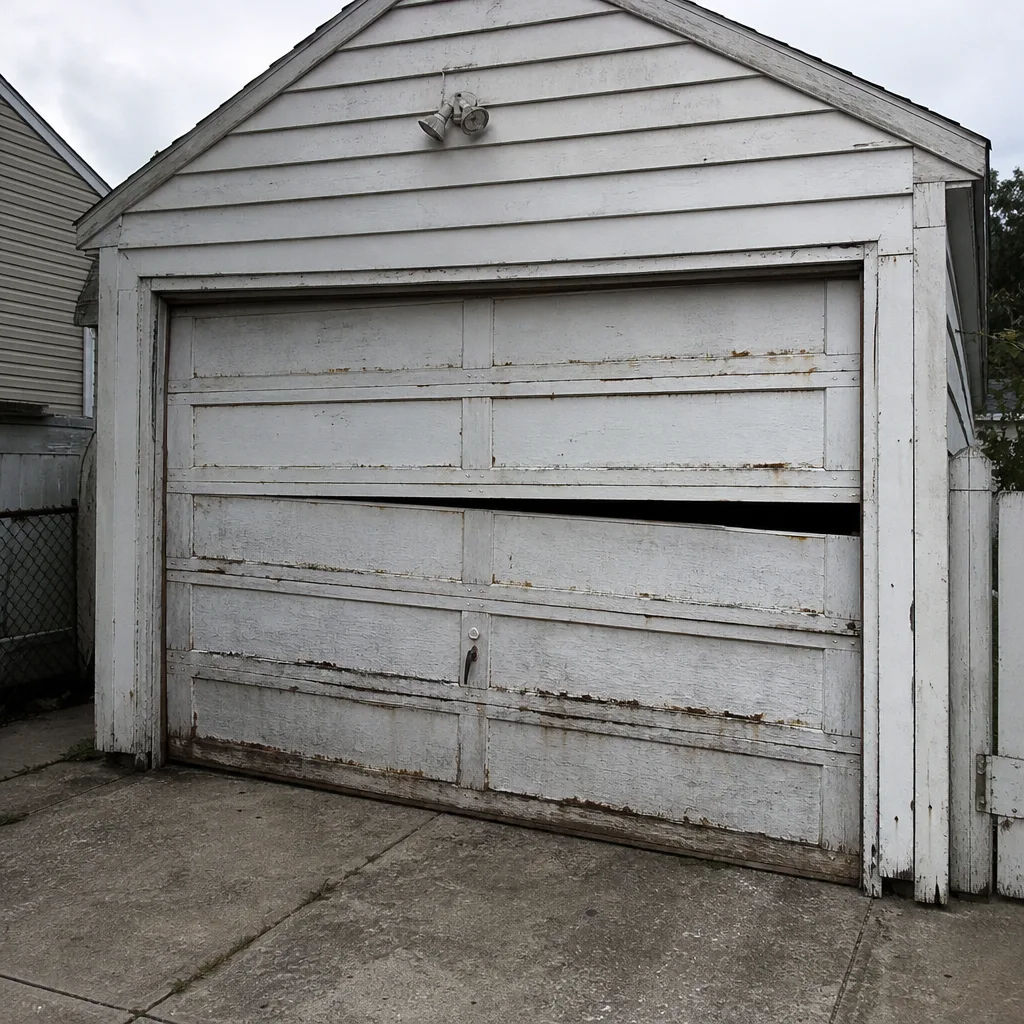 Before
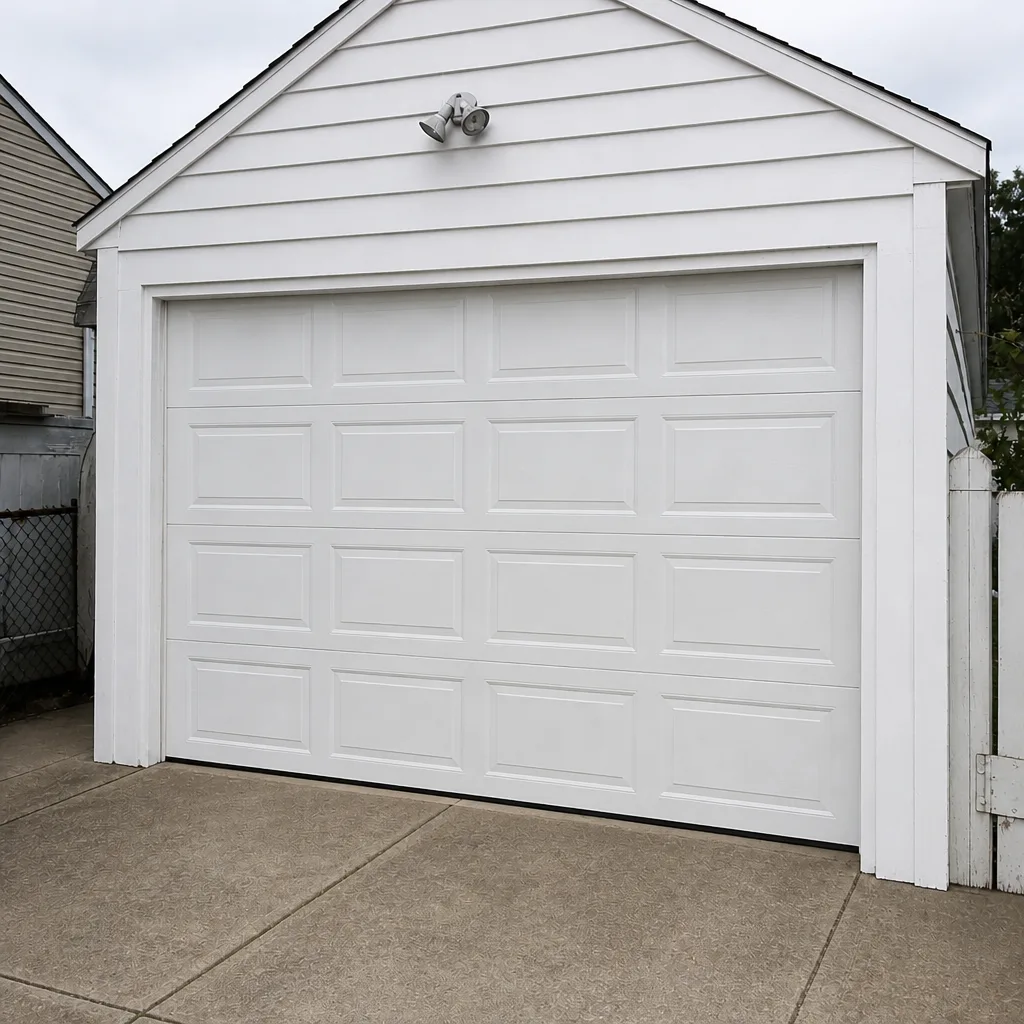 After
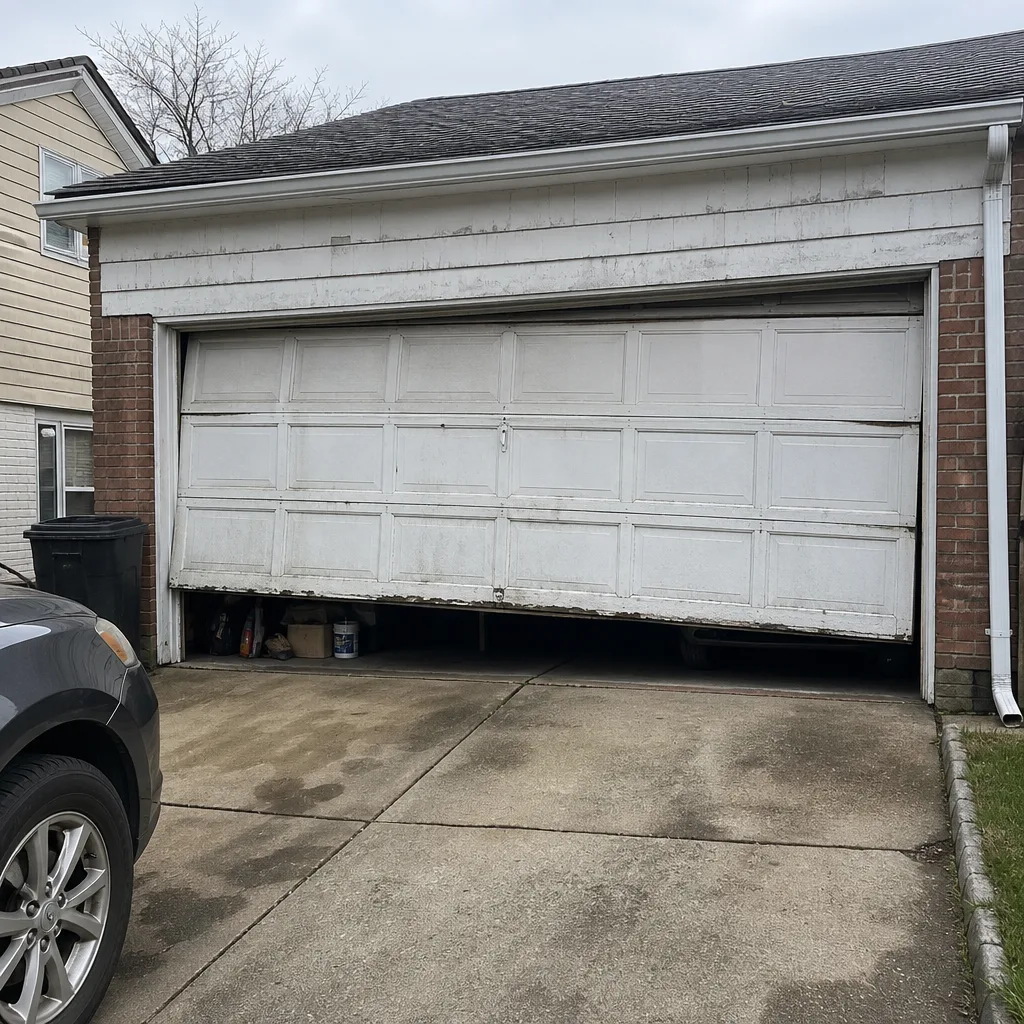 Before
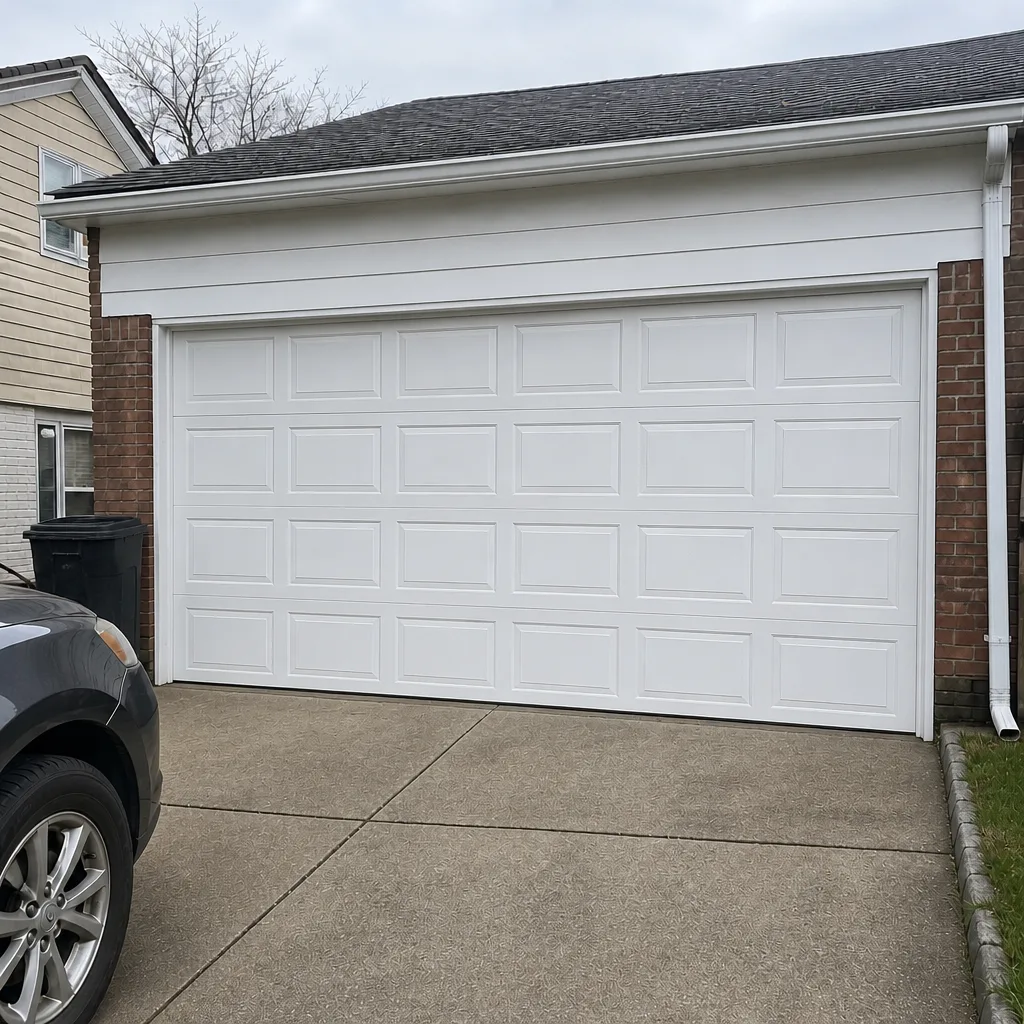 After
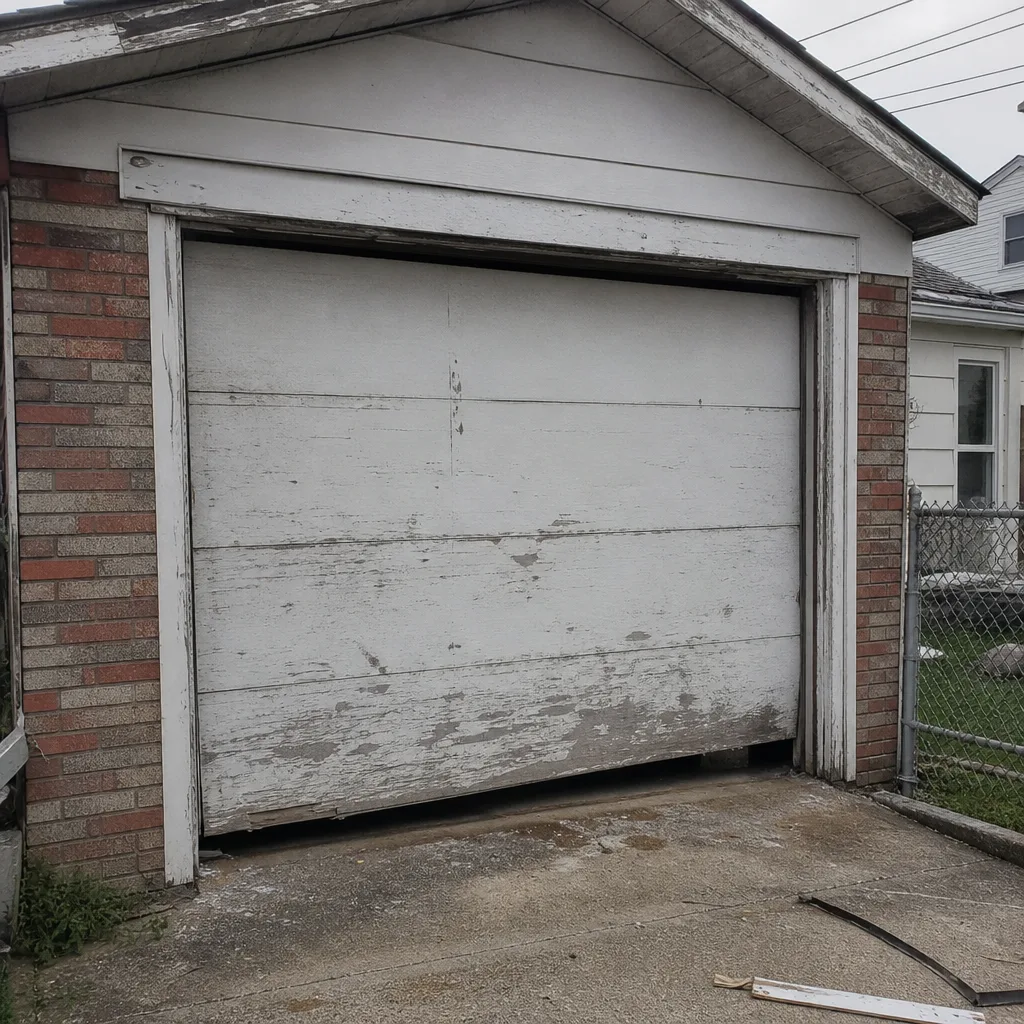 Before
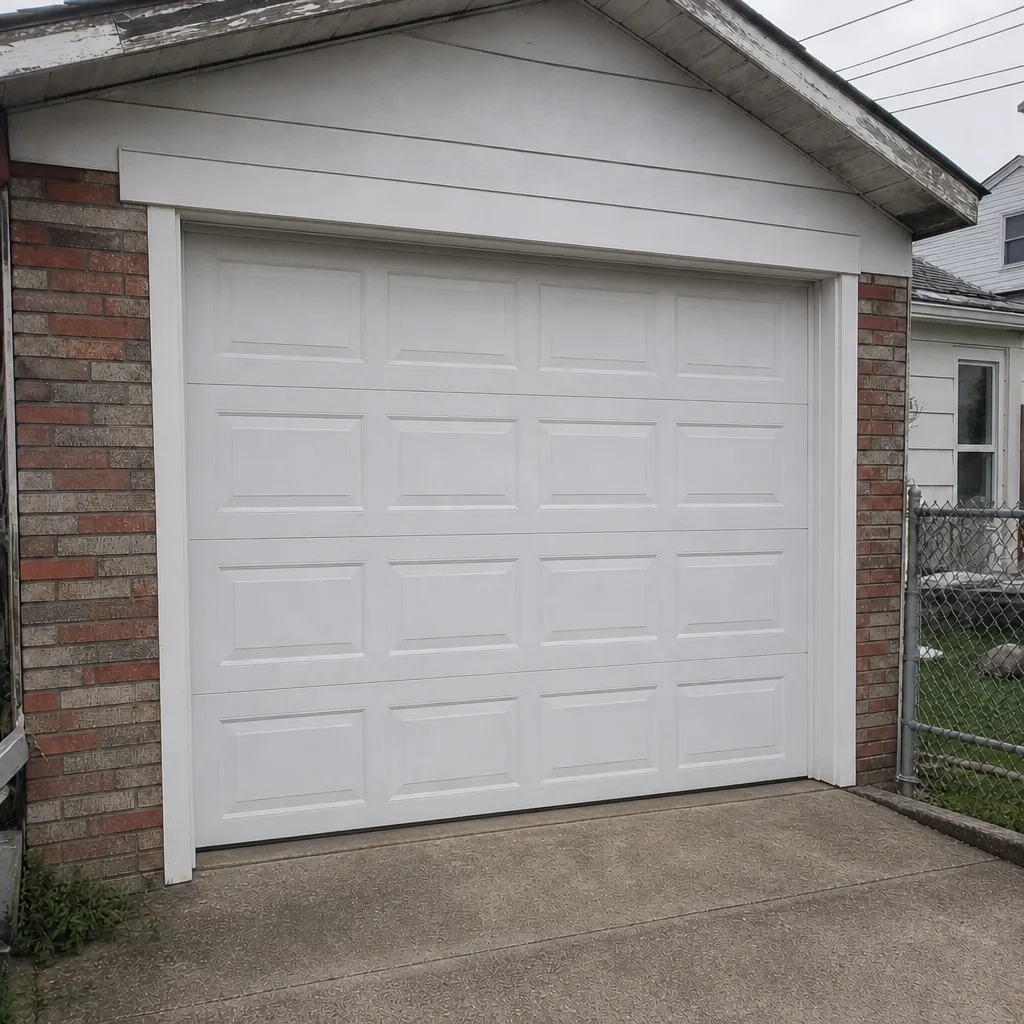 After
When to Call a Professional
You should call a professional when a warning sign involves the springs, the cables, the torsion bar, or a door that won’t hold its weight. Those components carry enormous stored force, and no homeowner should be adjusting them. You should also call when the opener reverses without a clear cause, when the door binds or runs crooked, or when a balance test fails.
For anything else – a grinding roller, a squealing hinge, a separated seal, a loose bottom bracket – the answer is to schedule the repair rather than ignore it, but you’re not in immediate danger. The sign only costs you money when it’s still being ignored a month later.
Garage Door Repair South Ozone Park offers free estimates in South Ozone Park. Call (877) 810-4860. We answer 24/7. Fast dispatch from 7am to 7pm, Sunday through Friday. Our technicians have up to 12 years of experience, and we run the same spring repair, opener diagnostics, and installation work whether it’s an urgent call or a scheduled one.
Frequently Asked Questions
A loud pop from the spring area on opening is the most serious sign, and you should stop using the door immediately. It usually means a torsion spring has snapped, which leaves the door’s entire weight on the opener and cables. Cycle the door again and it can drop on a car or a person. Call (877) 810-4860 and we’ll get a trained technician out. Estimates are free.
Yes, but schedule the repair within about a week. Grinding usually means worn rollers or dry bearings, and those parts are wearing the track every cycle. A short delay costs a roller. A long delay costs a track, which is a far bigger repair. Call (877) 810-4860 and describe the sound so the right parts come with the technician.
Run the 60-second balance test. Disconnect the door with the red release cord, lift it to waist height, and let go. If it stays put, the springs are balanced and the opener is likely the problem. If it drops or slides, the springs are out of tension and the opener has been dragging a heavy door. Call (877) 810-4860 for an exact diagnosis. Estimates are free.
Tell us the sound, when it happens in the door’s travel, the door’s manufacturer and model if you can find the plate, and the opener brand. That combination is usually enough to tell us whether to load a matched spring pair, an opener gear, or a set of rollers. Call (877) 810-4860 and be as specific as you can – it saves you a second visit.
Yes. Temperature swings from winter to summer put torsion springs out of adjustment, and tracked-in road salt attacks the bottom seal and panel edge. The bay’s humidity also rusts cables and springs faster than a dry climate would. Check the door each spring and again after the first cold snap. If you’re not sure what you’re looking at, call (877) 810-4860. Estimates are free.
Hesitation almost always means the door’s tension is out of balance and the opener motor is straining to lift it. The springs should carry the door’s weight, not the motor. Every cycle the motor fights that imbalance wears it faster. Get it checked before the opener fails on top of the spring repair. Call (877) 810-4860 for a free estimate.
The Bottom Line
Garage door warning signs aren’t subtle – they’re just easy to explain away. Grinding means rollers, squealing means dry bearings, popping means a snapped spring (and a door you shouldn’t use), banging means loose hardware, and hesitation means the motor is doing work the springs should be doing. Run the balance test twice a year. Stop the door immediately for a pop or a broken spring, schedule the rest within a week, and call with a specific description so the technician arrives with the right parts. In South Ozone Park, the climate makes every one of those signs show up sooner than you’d expect.
The moment a warning sign shows up, call (877) 810-4860 for a free estimate. We work on LiftMaster, Chamberlain, Genie, Clopay, Amarr, Wayne Dalton, Craftsman, and Raynor systems, we repair before we recommend replacement, and we make sure the price is quoted and agreed before any work starts. We answer 24/7. Fast dispatch from 7am to 7pm, Sunday through Friday.
Written by the team at Garage Door Repair South Ozone Park.